Monday, December 23, 2013

A Christmas Card With A Secret

As a 'Happy Holidays' from SAM, we bring some cheerful holiday pictures that are a bit more than meets the eye. Yes, they are Christmas trees, but they are also intel!


Population Movement Simulation Results 1 

Consider this a teaser for what is to come from SAM in the new year. 2014 will bring a series of visually-appealing posts on Turkey, Syria, nuclear non-proliferation, refugee population simulations and a host of innovative analytic methods for the everyday analyst's toolbox. 


Population Movement Simulation Results 2


Wishing happy holidays and a brilliant start to 2014 to all our faithful readers!

Thursday, December 5, 2013

The Day We Almost Nuked North Carolina (Or...Why Don't We Still Write Like This?)

The M-39 in a field near Goldsboro, NC, 1961
Old cold warriors like me are not surprised by stories of accidents and incidents involving nuclear weapons but most of my students have no idea what that environment was like.  In fact, other than those inducted into the Cult of The Atom, very few people living at the time had any idea of how close we came, on a number of occasions, to accidentally blowing ourselves up (while forgetting about those times we almost did so purposely....).

Recently, several stories about those good 'ol days have resurfaced as a result of newly declassified documents.  For example, the news making the rounds today is that the launch code on US weapons was 00000000 for 20 years - sort of like setting "password" as your password, except with a nuke.

This article led, in turn, to some new information on the Goldsboro, North Carolina incident in which, back in 1961, a B-52 broke up in mid air, allowing a couple of 4 megaton M-39 nuclear weapons to fall out of the airplane.  One of the bombs fell straight into a muddy field where it disintegrated more or less harmlessly on impact.

The second one, however, deployed its parachute and started going through its arming sequence.  Why didn't it blow up?  According to Parker Jones, the supervisor of the nuclear weapons safety department at Sandia national laboratories (writing in 1969), "one simple, dynamo technology, low-voltage switch stood between the US and a major catastrophe!"

Curious about how much damage a 4 MT bomb would do?  Here is an estimate courtesy of NUKEMAP.  It includes both immediate damage and the resulting fallout.  http://www.nuclearsecrecy.com/nukemap/?&kt=4000&lat=35.3848841&lng=-77.9927651&airburst=0&hob_ft=0&fallout=1&ff=55&rad_doses=1,10,100,1000&zm=8

What really impressed me, however, was the way the memo was written.  There is no tiptoeing around the issue, no spin doctoring.  Here is a senior scientist calling the nuclear weapons community out on improving safety.  He does it directly, bluntly, and with no attempt to spare the readers' feelings.  The Guardian, which published the declassified memo, doesn't allow me to embed the document but it is only 2 pages and worth reading in its entirety.

Monday, November 25, 2013

TS/SCI: Thanksgiving Supper/Special Culinary Ingredients

Happy Thanksgiving!

In light of the impending holiday season, we are taking a moment (or a blog post, as it is) to indulge in quiet reverie for all that is edible and delicious. 

And yes. You read correctly. SAM is publishing TS material!

Don't worry. We aren't Wikileaks. Just humble listmakers bringing you the top ten most unexpected yet necessary ingredients for holiday (and everyday) cooking.

  • Stone ground mustard 
Everyone has that one ingredient; the one thing they add to almost every dish they prepare. Mine is stone ground mustard. Inglehoffer is my brand of choice. Stone ground mustard makes just about anything better, from salad dressing to my heart-attack-Mac (fantastic baked macaroni and cheese recipe below). But mustard's capabilities do not stop there! Who knew there was a chic side to mustard? For an explanation of that statement, see the tarragon and carrot tart recipe.

  • Honey
Honey is the number one ingredient in salad dressing. Homemade salad dressing is one of those things that may seem intimidating, but any person with some olive oil and a spoon should be able to whip up in under 60 seconds. I guarantee that you already have the ingredients at home. See simple salad dressing recipe below.

  • Nutmeg
Nutmeg is not an uncommon ingredient in pie. But it is an uncommon ingredient in fetuccine Alfredo   In fact, nutmeg is the top secret ingredient in all those delicious Italian cream sauces we know and love. Whether it's Gruyere, Parmesan, white wine or just plain cream sauce, it isn't complete without a dash of nutmeg. (Homemade Alfredo sauce is another seemingly intimidating recipe that is actually quite easy and perfected in under five minutes; see Alfredo sauce recipe below).

  • Vodka
Okay. I know what you're thinking. Vodka is the not-so-top-secret ingredient in martinis. But there is a certain method to the madness of putting vodka in your homemade holiday pie crusts. The vodka gives the crust added moisture; it makes it easier to work with. But alcohol quickly evaporates in the high temperatures of the oven leaving your pie crust alcohol-free.

  • Chocolate
This trick comes all the way from the ancient Maya. Put chocolate in your chili and chili in your chocolate. Being a history-of-cacao fanatic, ancient cacao remedies can be traced all the way back to before the Spanish conquest. The famous Mexican mole (moh-lay) sauce is based off the timeless mixture of chili and chocolate. Long story short, next time you make a pot of chili, throw in a Hershey bar or some cocoa powder.

  • Chili
This brings me to chili. Not chili the soup, but chili the pepper. Chili powder is the secret to that winter cup of hot cocoa. Some rich chocolate, a cinnamon stick and a dash of chili powder and that is what they call Mexican Hot Chocolate. Beyond hot cocoa, chili is the key ingredient in all things chocolate; sauces, truffles, fudge, etc. The darker the chocolate, the more chili appropriate.

  • Beer
Beyond answering the question, "when is beer not a good addition to food," I make the case that beer has a very special place in two particular culinary endeavors. The first is one I have already mentioned. Chili. The single best thing for a slow-cooking pot of chili is a bottle of beer (I personally like to use an amber). The second suggestion is a bit more surprising. Bread. Yep, there is such a thing as beer bread. The steam smells of hops and it's dense with a slightly sweet finish. The best part (other than the fact that it contains beer) is that it is extremely easy to make. Why? No kneading required. Also, no yeast! The beer contains the yeast the bread needs to rise, so the beer bread recipe is basically just beer and flour. It is also very flexible. Experiment with different kinds of beer (nothing too hoppy or it doesn't rise well), add herbs (rosemary is great) or add jalapeños for those who like a little spice.

  • Cabernet Savignon
This one might seem obvious, but is worth noting anyway. Cabernet (even cheap Cabernet - any red wine, really) makes a red sauce. It also makes sauteed mushrooms. So it really makes a sauteed mushroom red sauce! Add half a cup of white wine to your cream sauces and half a cup of red to your marinaras just when you turn off the stove about 10 minutes before serving, so the alcohol doesn't completely cook out of the sauce.

  • Sumac
Sumac is the most top secret of all the secret ingredients listed in this post. It is so secret, you will never find it in your local grocery store, but it is well worth the hunt. Typical of Turkish or Greek food, it is a staple spice in Middle Eastern cooking, especially Lebanese cuisine. Dark red or dark purple in color, sumac has a dry, tannic almost burnt flavor, pairing well with paprika or cayenne. Use it in a rub for chicken, sprinkled over a simple yogurt or tzatziki sauce or with anything paired with feta cheese for an authentic Mediterranean flavor.

  • Cinnamon
The final secret ingredient is no stranger to the American palette. Cinnamon is quite common, especially sprinkled on top of a cappuccino or mixed in the filling of a warm apple pie. As it turns out, the secret to putting cinnamon in coffee is when you put the cinnamon in the coffee. Just after pouring your fresh grounds into the coffee filter, sprinkle cinnamon over the top before brewing. This will accomplish two things: 1. Give your coffee a subtle yet unmistakable hint of cinnamon and 2. Make your house or apartment smell amazing!

Now, as promised, here are the recipes:

Baked Mac-and-Cheese (Heart-attack-Mac)


1 cup cottage cheese
1/2 cup sour cream
2 cups sharp cheddar cheese (plus 1/2 cup more for topping)
Elbow noodle pasta
1 tablespoon stone ground mustard
Black pepper
Salt

Blend cottage cheese, sour cream, mustard and salt together in blender until smooth. Cook pasta and strain. While pasta is still hot, pour cheese mixture over top, adding cheddar cheese and tossing until thoroughly coated. Place mixture in baking pan, top with the extra 1/2 cup of cheddar cheese and black pepper. Bake in oven at 350 for about 20 - 30 minutes, or until edges just start to brown. Remove from oven and let sit for approx. 20 minutes before serving.

Simple Salad Dressing

Mix the following ingredients together in no particular order (can be made in advance):

4 tablespoons extra virgin olive oil (quality olive oil is key)
2 tablespoons balsamic vinegar
The juice from half a lemon
2 teaspoons stone ground mustard
2 teaspoons honey
Fresh ground black pepper
Pinch of salt
2 teaspoons dried thyme

For sweet salads containing spinach, mushrooms, pears, Gorgonzola cheese or walnuts, increase honey and mustard, decrease lemon and vinegar. For tangier salads containing chicken, dried cranberries, green apples, pecans or feta, de-emphasize the honey and mustard.

Homemade Alfredo Sauce

1 cup heavy cream
1 stick unsalted butter, cut into pieces
1 cup finely grated Parmesan cheese
1 teaspoon nutmeg
2 teaspoons paprika or cayenne
2 cloves garlic, minced
5 - 7 large brown mushrooms, sauteed (with Cabernet or sherry)
1/4 cup finely chopped parsley 
Freshly ground black pepper
Salt

Sautee mushrooms and garlic together. Set aside. Heat cream over medium in saucepan on stove until steaming, but do not bring to a boil. Turn off the heat, but leave the saucepan on the stove. Add butter and stir until melted. Add cheese and stir until melted. Throw in spices, parsley and mushrooms, stir lightly and pour over warm, fresh pasta.

Tuesday, November 19, 2013

Reduce Bias In Analysis By Using A Second Language

In a world where the majority of analysts are bi- if not multi-lingual, the question of how language affects both the analytic process and analytic product is an important one. Emotion, language processing and cognitive biases aside, the intriguing question remains: Would you make the same decision in English as you would in, say, Chinese? Most analysts would likely answer yes to this question, but recent research led by Boaz Keysar out of the University of Chicago suggests otherwise[1].


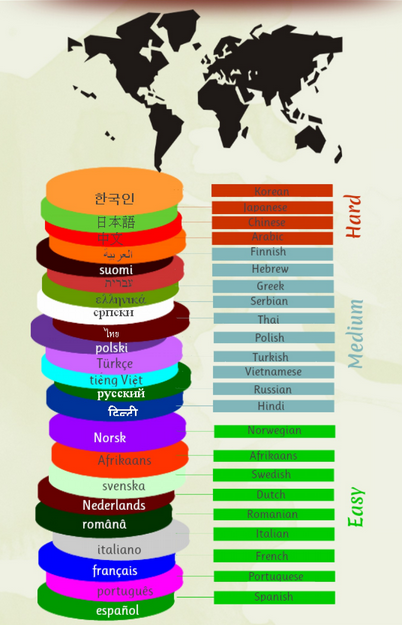
Thinking of learning another language? This infographic is a good
suggestion of which language you might want to consider
tackling first.
http://visual.ly/hardest-language-learn
The study, published in Psychological Science, concludes that “people are not as loss averse in a foreign language as they are in their native tongue.” Being less loss averse, that is more willing to take on risk, might sound like a dangerous characteristic to possess from an intel analyst’s perspective. In this case, however, being less risk averse means that people more systematically assessed the problem and came to a more rational conclusion. At the root of this finding is the conclusion that “people rely more on systematic processes…when making decisions in a foreign language.” Regardless of how accepting of risk we are as analysts, the ability to make decisions driven more by rational thought and less by emotion is a capability to which every analyst likely aspires.

In three studies, Keysar showed that while participants made different decisions based on how the problem was framed[2] (as more or less risky), they made the same decision for both risk conditions when using their foreign language. The three groups of participants had English as a first language and Japanese as a second, Korean as a first language and English as a second or English as a first language and French as a second, indicating that this effect is replicable within and across language family boundaries.

So why, then, do we make more rational, less biased decisions in our second language than in our first? It largely has to do with the lack of “emotional resonance” that we derive from foreign language text. Literature on second language acquisition unanimously agrees that people perceive messages delivered in their second language as less emotional (and consequently less impactful) than messages delivered in their first language; this concept applies to everything from political opinion to curse words[3].

How we perceive emotion then ties directly to our internal cognitive processes. According to Daniel Kahneman, the most widely respected authority on these internal processes, we have two broad systems of thinking – System 1 and System 2 thinking[4]. System 1 is automatic (and often times uncontrollable) while System 2 is more deliberate and rational. Think of System 1 as the mechanism driving impulse buys and split second decisions, whereas System 2 is more like making a grocery list in advance. Cognitive biases, or internal heuristics (shortcuts) that influence both our analytic process and analytic product, originate in System 1 thinking. Examples of cognitive biases particularly relevant to intelligence analysis are confirmation bias, anchoring bias and the framing effect (addressed directly in Keysar’s article).

Cognitive biases originate in System 1 thinking along with our gut instincts, emotional reactions and a less credible substantiation for intelligence analysis, intuition. Consequently, it makes sense to pursue analysis derived from System 2 processes as it will likely be less biased, more rational and more systematically attained. The argument here is that conducting analysis within the domain of a second, third or fourth language will lead to an increased reliance on System 2 processes, thereby reducing bias and ultimately resulting in more systematically-derived analysis. The results of Keysar’s study, while still relatively new, support this perspective.

In practice, with bilingualism now practically a pre-requisite for analysis work, the benefit of this argument to intelligence analysts is obvious (coupled with the other known benefits of bilingualism).[5] The traditional view is that an analyst is at an automatic disadvantage when operating in a non-native linguistic domain to conduct analysis, fearing the loss of meaning and context. The argument in this article, however, sheds new light on the quality of the analytic product obtained in a non-native language. Would you make the same decision in English as you would in, say, Chinese? The answer is that you might not, and your Chinese decision just might be more impartial.


[1] Keysar, B., & Hayakawa, S.L. (2012). The Foreign-Language Effect: Thinking in a Foreign Tongue Reduces Decision Biases. Psychological Science, 23, 661-668.
[2] Kahneman, D., & Tversky, A. (1979). Prospect theory: An analysis of decision under risk. Econometrica, 47(2), 263-292. The bias phenomenon Keysar’s article claims to neutralize is what Kahneman and Tversky call The Framing Effect, and is one of the many known cognitive biases to affect intelligence analysis.
[3] Emotion and Lying in a Non-Native Language (2009). International Journal of Psychophysiology, 71, 193-204. Puntoni, S., Langhe, B. D., & Van Osselaer, S. M.J. (2009). Bilingualism and the Emotional Intensity of Advertising Language. Journal of Consumer Research, 35(6), 1012-1025.
[4] Kahneman, D., & Frederick, S. (2002). Representativeness Revisited: Attribute Substitution in Intuitive Judgment. Heuristics and Biases: The Psychology of Intuitive Judgment, 49-81.
[5] Bialystock, E. (2011). Reshaping the mind: The benefits of bilingualism. Canadian journal of experimental psychology, 65(4), 229-235. Though there are many studies that demonstrate the known benefits of bilingualism, this is a recent article that reviews many of these previous articles.  

Monday, October 28, 2013

"MAP": The Secure, Portable, Bio-optical, Knowledge Recording And Dissemination System (COOLINT)

The French have done it!  This new technology is absolutely amazing!